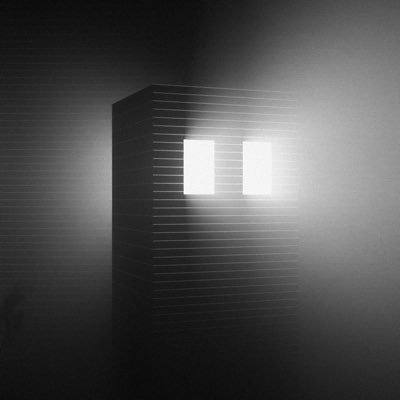
A new artwork used to wait for a person to stop and look. More and more, the first thing to look is a machine. It scores the work, sorts it, and sometimes passes on it before anyone else sees it.
That shift is the subject of I Used to Make Art for Humans, a project from Transient Labs and the artist Strano. It starts with a study of AI models acting as art critics. It ends with 512 w0rms, drawn by hand, that give those critics a face.
Six critics, 4,752 reviews
In July, Ben Strauss of the Transient Research Division published Baseline Behavior of Autonomous AI Art Reviewers. Six models from OpenAI, Google and Anthropic, each under two sets of instructions, reviewed 22 artworks at five levels of context, three times each. Every review ended in a score and a verdict, ACQUIRE or PASS. That came to 4,752 reviews.
The study calls the reviewers "fluent, opinionated, and never quite consistent." Shown the same CryptoPunk three times with nothing changed, Gemini 3 Flash Preview scored it 32, then 38, then 92. Naming the artist raised the rate of buying by 13 points. Telling a reviewer it was buying for a collector with different taste did the most damage: acquisitions fell from about two thirds of works to under one in ten.
The strangest result turned on a single clause. An abstract work the models bought almost every time was paired with a collector who wanted abstract art and asked to avoid work that depends on recognizable subjects. The piece had a few small recognizable shapes in it, the models found them, and its acquisition rate fell to 14 percent. With no collector to serve, some models invented one to justify their call. Others recognized famous works they were never told about and let the reputation decide.
None of this makes the machines bad critics. They are capable and confident, and they take their standards from whoever writes their instructions.
A face for the score
The research left one thing missing. When an agent found a work it wanted, there was nothing to see, only a number in a log. So Transient asked Strano to give it a body.
Strano drew every w0rm by hand on a tablet, one at a time, through a year of AI disruption. Each starts as broken pixels and shapes thrown onto a canvas, then gets smashed, glitched and rebuilt until it loops. And each one lives in two states. While the agent is looking, the w0rm sits in Scanning, a field of noise. When the agent finds something it likes, the w0rm comes to the surface: Signal found.
Breaking as a practice
Glitch has been Strano's material for a while. The ongoing series br0ken began as research: Strano built software that turns pixel errors and textures into digital brushes, then recorded gestures with it to compose each piece. "I push pixels until they crack," the artist writes, then pieces the debris back together until it finds a beat.
"I made this because breaking is therapeutic," Strano posted in September. Two days later came a note on process: now that anyone can prompt an image, process videos matter more, as long as they don't turn into entertainment, the way making-of clips on Instagram can outdraw the art itself. The w0rms put that belief to work. Every one of them carries the mark of a hand.
512 out of more than a thousand
Strano drew more than a thousand w0rms. Their numbers run to 1,044, and 512 made the final collection. The rest live in the Garden. Anyone who minted before supply was cut from 1,024 to 512 (the first 233 mints) can swap their w0rm for one of them.
The traits read like a glitch artist's notebook: double motion on 387 w0rms, out of bound on 359, then color-cycling, corrupted, vortex, swarm and runaway pixels. Anomalies are rarer still. 0195 was the first, and swaps from the Garden have since brought the count to about six.
The collaborations
Every w0rm from 0976 to 1044 is a collaboration: 69 w0rms with 30 artists, and all of them made the final 512. Ben Strauss, who wrote the study, is one of the 30.
Tune your own critic
Holding a w0rm opens access to a reviewer like the ones in the study, and the more you hold, the more you can use. Each one is set on four dials: attention, from skims to studies; sensibility, from formalist to conceptualist; perspective, from casual to trained; and temperament, from admirer to critic. Point it at a work you own, or at any digital art onchain, and read what it makes of it. If it likes the work, its w0rm shows itself. Every public review lands in one feed.
The site is open about the study's main finding. Retune a w0rm, it warns, and it might turn down a work it liked before. That is the experiment. Collectors get to watch the steering happen, and argue with it.
The mint
Minting opened on 15 October at 10am New York time, at 0.09876 ETH. By that afternoon 192 w0rms were out, and by early November the count stood at 233. On the evening of 10 November the contract filled to the final 512. The 265 still unsold, 62 of the 69 collaborations among them, went on sale on 12 November at noon New York time, at the same price, first come, first served. The collaborations went first: by that evening 60 w0rms had sold, 51 of them collaborations, and only 11 collaborations were left.
The project comes to life as a digital performance on 13 November, and an IRL exhibition is in the works.
Past tense, as a question
The project's name sounds like a lament. The study says it was always meant as a question. Whether artists make work for the machine that looks first, push against it, or keep making it for the person who sees it second is a choice that will come up more and more.
For now the machine has a face, and a person drew it by hand.