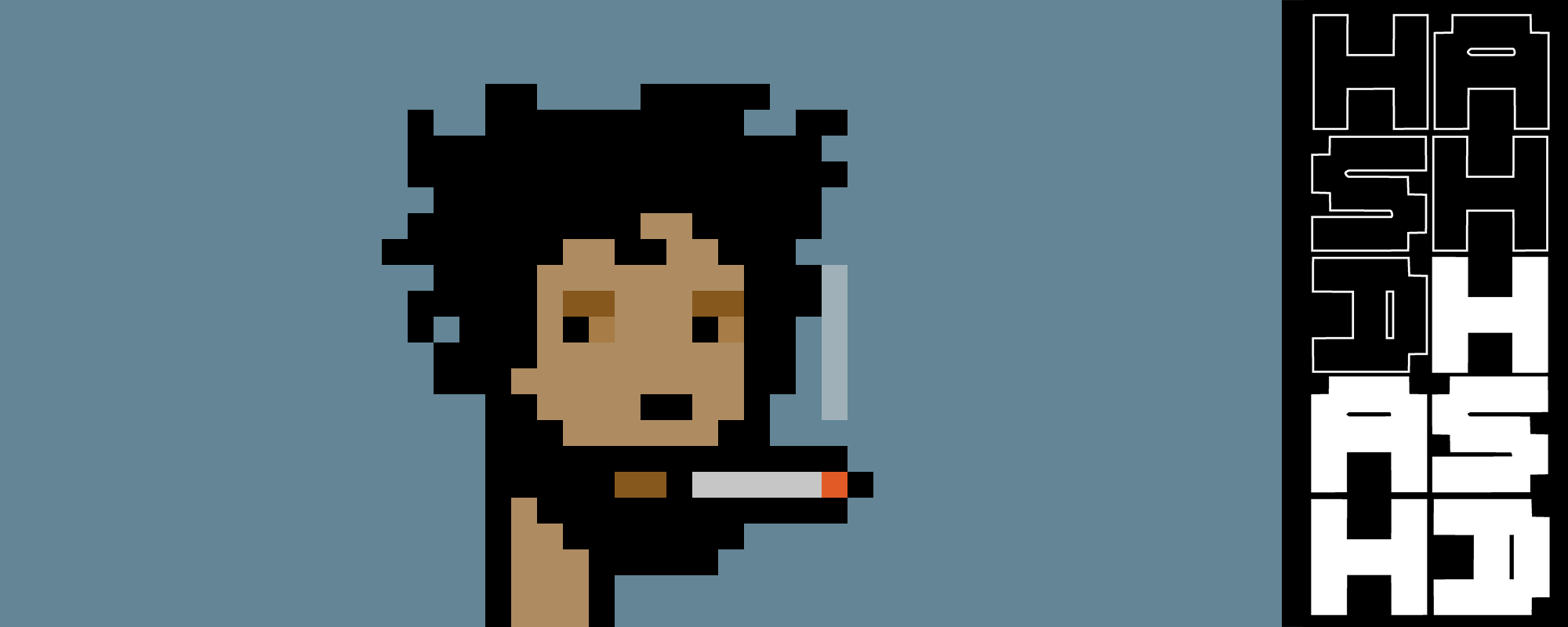
On the timeline, a Meme Card looks like any other NFT. Behind it is 6529, a network trying to build a free digital society, where what you hold, and for how long, sets the weight of your vote.
maybe has been part of it since 2022, pseudonymous from day one. He runs maybe’s dive bar, a chat room with nearly half a million posts, more than seven times the network’s official chat. He believes in 6529 as much as anyone, and he will tell you where it falls short.
I asked him what collectors are missing, what the cards actually do, what the critics get right, and where this goes next. The art along the way is all from his own collection.
You run a dive bar inside a network trying to build a free digital society, and all anyone knows you by is maybe. So who is maybe, and how did you end up behind that bar?
I’m a surprisingly committed person with a spectacularly noncommittal name.
Back in 2022, I saw Punk 6529 mention that he’d been “fast cat typing” in Discord for three hours and that his fingers hurt. He intrigued me enough to want to find out what the man was yapping about. Joining Discord, however, involved decisions I hadn’t quite wrapped my head around. They wanted my phone number. I wanted to stay anonymous. I wasn’t sure what to do.
Maybe I’ll do this. Maybe I’ll use Discord.
Then they asked me to choose a handle. “Fuck, Maybe.”
The plan was to remain anonymous and quietly see what was happening. I honored only half of that plan.
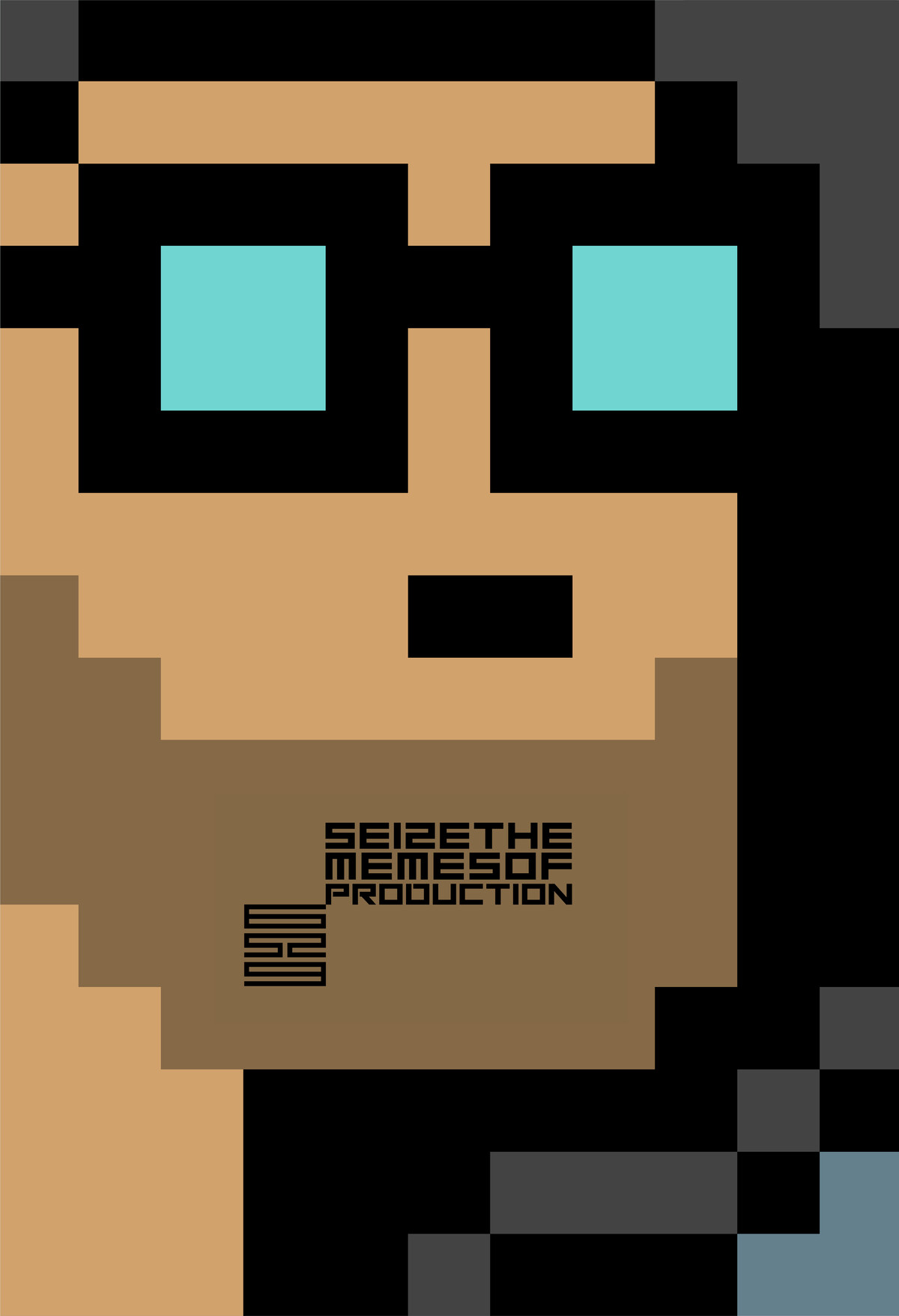
To my complete surprise, it turned out I had rather a lot to say... and that I liked the people I was saying it to. I would describe myself as hopelessly curious, possibly irreverent, easily excited by ideas, and prone to getting involved beyond whatever I originally intended. Nothing about me and 6529 was planned. I’m no engineer, which hasn’t stopped me from building so many things. “I wonder if...” has a tendency to become a project. I have so many projects mid-juggle I come back up with the same ideas I’ve already built.
The bar itself began as a tongue-in-cheek relationship-advice thread because my wife very literally hates my guts. Eventually, the people in it agreed that I seemed more like the type who should be running a dank, divey dive bar. Reasonable really, and a more sensible business model.
It became a place with regulars, lurkers, ridiculous jokes, off-color stories, the occasional bar fight, and conversations that sometimes wander where nobody expects. I think it’s somewhere you could arrive curious about 6529 and find yourself coming back just because you liked the people.
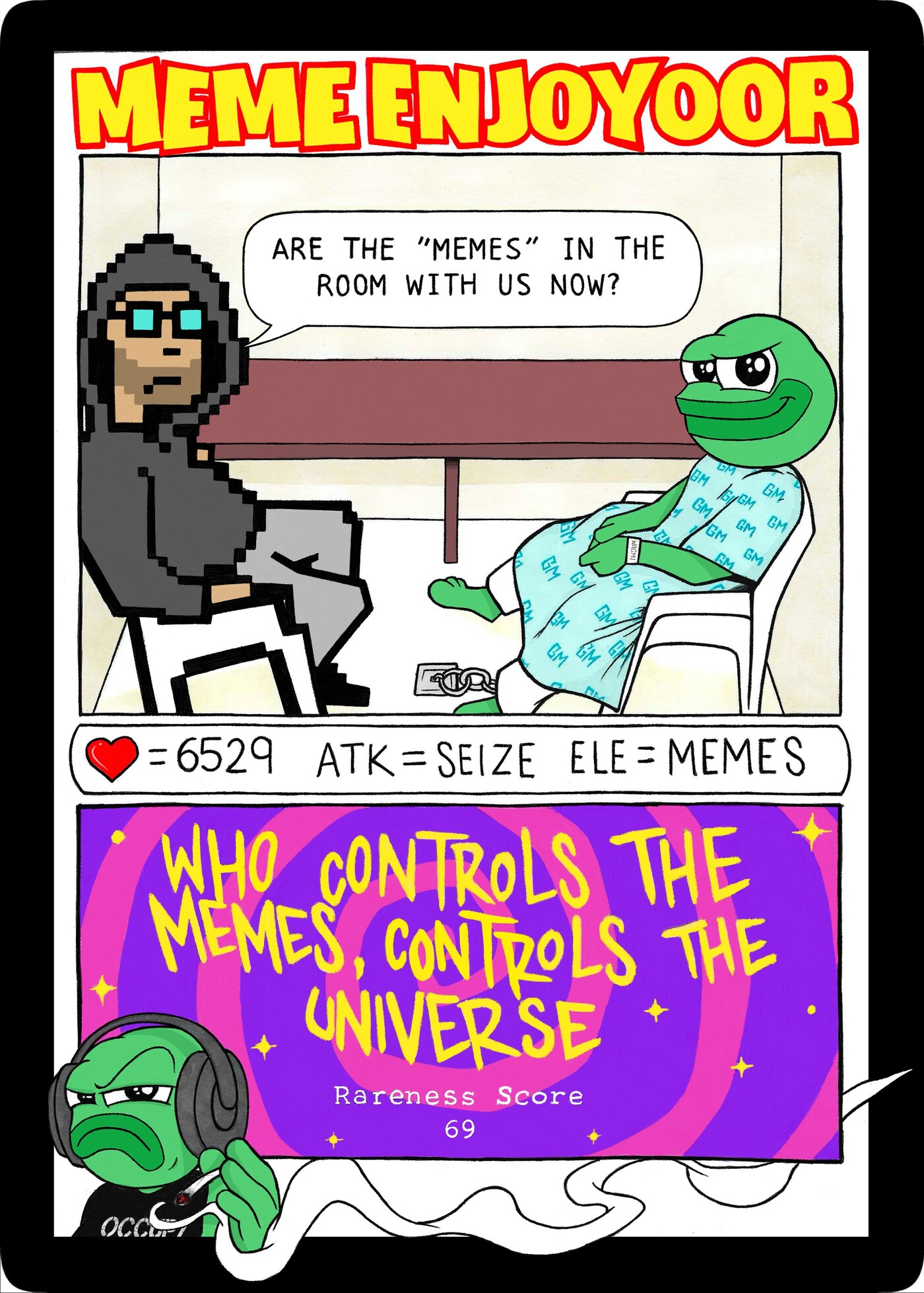
Also, I take the possibility of a freer world crazy seriously. But I think building it should be a good time.
And if you’re going to build a whole digital society, somebody has to run the fucking bar.
A collector sees Meme Cards on the timeline and files them under another NFT collection. What are they missing? What is 6529 really about?
I think they’re seeing the art and missing the society. Sounds crazy. I believe this wholesale.
We have this wonderfully obnoxious saying: “Everyone gets their TDH at the price they deserve.” And yes, we do occasionally hear ourselves and cringe. But the subtext under the ego is an invitation to pay attention. Punk has spent years explaining this vision in public. I sympathize with anyone who doesn’t immediately see how collecting art connects to building a free digital society. It admittedly takes effort to understand. But anyone can understand it, and I think there’s enormous value in looking while your main investment can still be a little curiosity.
Because the cost of not comprehending or ignoring how your world works behind the scenes might be a cost far far greater than a meme card.
Look at how much of our lives we’ve handed to the convenience brokers. The banks. The social networks. The companies that deliver our dinner, arrange our rides, distribute our work, and decide what we see. They provide things we want, often brilliantly. Magically! We get convenience but they get the control. One easy button at a time, we’ve made an extraordinary amount of ordinary life dependent on somebody else’s permission, like a soon to boil frog. I don’t think we boil inverse brahs, yet.
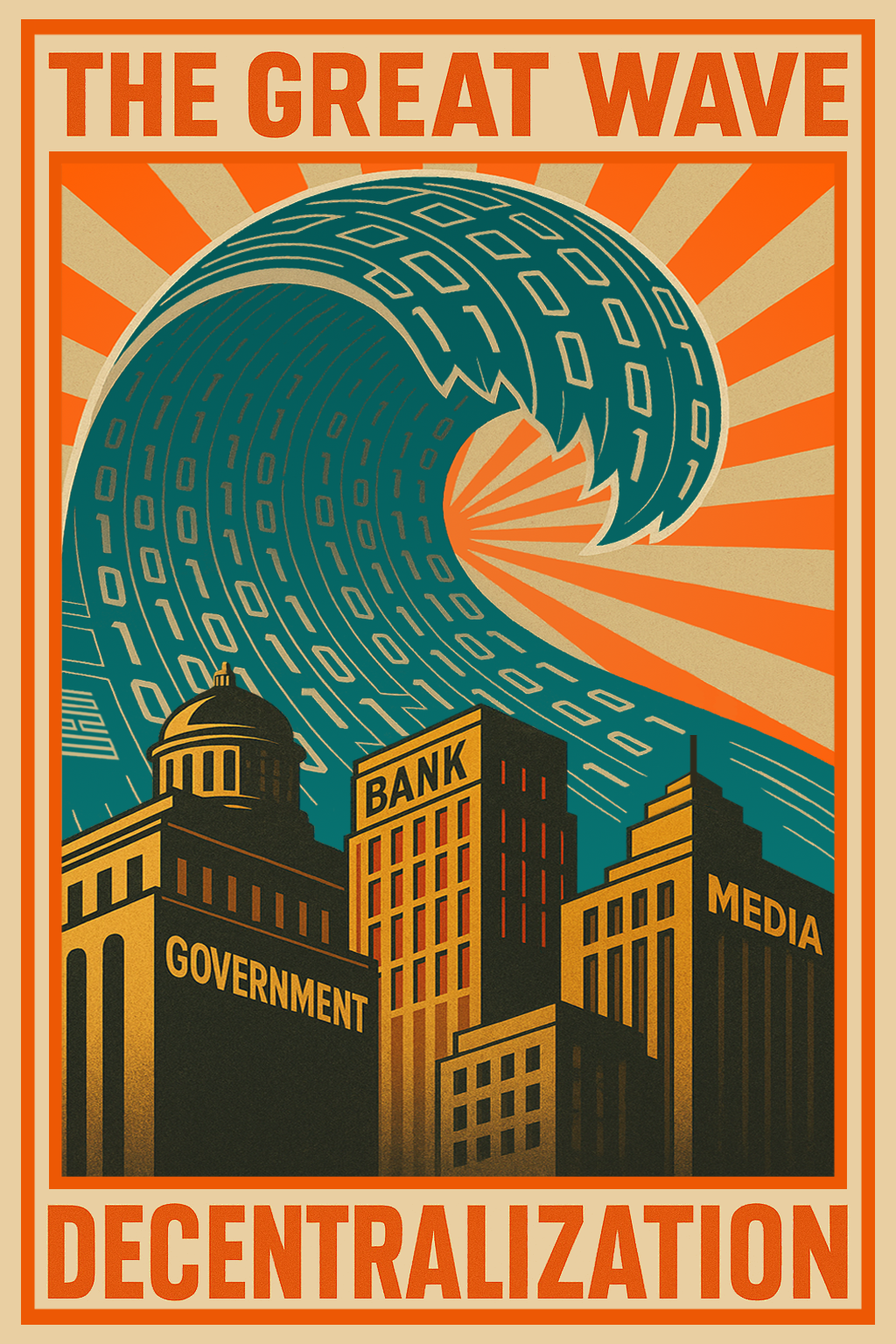
It’s easy to feel completely free inside a system that currently approves of you. It is a mirage.
The question is what happens when that approval changes. Suppose a politician decides that anonymity is unacceptable. Suppose “protecting children” becomes the justification for identifying every adult. Suppose a government pressures the handful of companies standing between you and your money, your audience, or your livelihood.
Exclusion could look incredibly mundane. A payment fails. An account gets restricted. An application is rejected. You spend six weeks arguing with a chatbot about a decision nobody will explain.
I would prefer to build alternatives before that becomes anybody’s normal Tuesday.
That’s what 6529 is really about to me: building the foundations of a free digital society. Infrastructure that people can independently inspect, use, and build on. Digital ownership that exists beyond a company’s database. Ways to organize, cooperate, and create without needing one institution to approve the whole thing. That is my ambition behind the network and I think it’s Punk 6529’s.
Identity and reputation are crucial to all of this. We need ways to recognize one another and decide whom to trust while preserving the freedom to use a pseudonym. You should be able to decide whether maybe keeps his word without needing a copy of his driver’s license. People ought to have room to build a history, contribute something useful, and become known through their participation.
The meme cards tie this all together. The art gives us shared culture. Collecting helps support the work. Holding creates a public, verifiable history through TDH, which is already used in collective decisions such as choosing the next Meme Card. You can start to see how art, ownership, time, and cooperation become the beginnings of larger possibilities.
This is all why I’m optimistic. We have people, tools, and the opportunity to build while we can still experiment, make mistakes, and have a good time doing it and generally we’re allowed to keep our perceived freedoms. We get to help decide what digital life on fucking Earth will become.
This is all the fairly crazy and ambitious shit hiding behind JPEGs. Those RIGHT CLICK SAVE things. But you have to squint to see it.
You have been around since 2022. What was this trying to be back in the Discord days, and what surprised you about what it became?
Honestly, the biggest surprise is that I’ve somehow become someone worth interviewing. I’m accepting before you reconsider!
Back in the Discord days, I don’t think we all had the same picture of what this would become. Punk was often vague about the exact shape of the finished thing, which left room for all of us to bring our own hopes and desires to the project. We could look at the same possibility and imagine quite different futures for it.
But there was one thing he was absolutely, relentlessly specific about: decentralization. Whatever we were building, that was the north star. And from where I’ve been sitting, it hasn’t moved an astral inch.
What I’ve come to appreciate is how much it costs to actually mean that. Time, money, complexity, and an apparently renewable supply of complaints. There’s almost always a quicker way to get something done if one person just makes the decision and everyone else gets on with it. There’s certainly no shortage of people suggesting that approach, particularly when they’re confident the decision would go their way.
Punk has been willing to absorb an extraordinary amount of frustration to keep that principle intact. Watching that over years tells us something that hearing a speech about decentralization never could.
And I think the combination mattered: enough room for us to imagine what this could become, and enough consistency that we could keep building toward it. Our hopes had somewhere to go. They could become things we actually made, communities we brought together, responsibilities beyond our normal lives we willingly took on.
Meanwhile, I somehow went from listening in Discord to running a bar, building tools, and being asked questions like this. I had plenty of opinions about what this place could become. Eventually, I found myself responsible for a little piece of it against all odds.
That’s probably what surprised me most. I showed up to hear what Punk was building. Somewhere along the way, it became a question of what we were going to build borderline together!
What does holding a card get me that holding another collection doesn’t? Explain TDH to someone who has only ever watched floor prices.
You can hold Meme Cards, accumulate TDH, and have absolutely no idea it’s happening. In that case, meaningless.
For me, it’s a full-throated statement: I believe a decentralized society can exist, should exist, and that I want to be there at its birth.
Mechanically, TDH stands for Total Days Held. It measures which eligible artworks you hold, how many, and how long you’ve held them, with published weights and collection bonuses. Holding over time builds your score. Sell a card and that card’s contribution vanishes. For the buyer, that starts their own holding history anew.

One’s TDH score has uses. It gives you weight in votes, including choosing which artworks become new Meme Cards, as well as the ability to assign reputation to other participants. So you can shape the collection and recognize people’s contributions and attributes. In time, a zillion more use cases will emerge.
One quick note of comparison:
I have a CryptoPunk. I love my Punk. It’s fun. It’s a flex. It’s my face in a world where I don’t particularly want to use my meat space face. There’s some personal branding, some trying to fit in, some investment thesis. It might be historic or idiotic. I’m open to it being both. For me, that relationship begins and ends around a piece of pixel art I love owning and using to represent myself.

My Meme Cards are a different beast. They connect me to this batshit crazy idea that art can provide a foundation for a free digital society. Collecting becomes a record of that commitment over time, and, notably, AI will bend everything eventually to its will except time.
Here’s the key though: the TDH number itself doesn’t tell you what I believe. I give it meaning through what I do with it.
And, though I may be repeating myself, it’s worth repeating, what I want to help build is a society where “maybe” can have a persistent identity: a history, relationships, a reputation, things I’ve made, promises I’ve kept. An identity I can carry across applications and communities without having to start from zero every time I walk through another digital door. TDH solves all of this...
As I write this, I get I sound crazy. I think it is quite nuts and yet, somehow, correct, weirdly.
Why put art at the center rather than a coin? And how does a card get chosen now that 6529 no longer picks them?
The art gives us something in common beyond the ceremonial seance of circle twerking a pump prayer. Art gives our ideas a visual tangible people can feel, argue about, share, and remember. Every society needs stories, symbols, humor, and reasons to care about one another. Memes!
The Memes artwork is also CC0, so anyone can freely share and remix it and we pray to Satoshi that you do. You don’t have to own a card to help spread the ideas or participate in the culture.
As for choosing the cards, that now happens through community curation on the Main Stage. Artists qualify to submit either by having been a previous Meme artist or by receiving at least 50,000 “MemesNominee” reputation points, WHICH IS EASY TO GET and is just a filter that prevents spam. The community votes using TDH, and those votes determine a new selection every Monday, Wednesday, and Friday until Doom’s Day.
You built the bar, an exchange, loans and a door lock, and you say you are no engineer. Why do people build here without being asked? What has the bar done that the tools couldn’t?
Because I’m a shameless self-advocate, we should probably add censorship-resistant chat, an anonymous board, TDH rentals, a VPN, NFT betting, zero-knowledge tools for 6529, our first AI bot, and a data and graph service to that list among, comically, several others.
I’m no engineer. I’m just exceedingly bad at seeing something that should exist and then minding my own biz.
There is a whole society’s worth of things to build here on new rails. And all the ordinary services people need will need to work in that society, too. Pick a business you use and ask what it could look like with a persistent digital identity, a reputation you carry with you, and communal infrastructure. You immediately start seeing opportunities everywhere.
To me, it has the energy of a gold rush, and I’m continually amazed by how few people seem to see the scale of it. Some of the biggest opportunities are still sitting there. People build without being asked because once something becomes obvious, waiting for someone else to assign it has a childlike feeling of ridiculousness attached.
I keep coming back to ridesharing. I don’t know whether Uber has anything you’d call a soft-denial system. From the outside, I can’t inspect how every decision affecting me gets made. The service I’d like us to build would have explicit rules about participation: which behavior affects your standing, how relevant reputation is assessed, what evidence counts, and how you challenge a bad decision. If you lose access, you should be able to understand why and what you can do about it.
That’s the kind of everyday problem I want us working on. There are enough of them to keep us occupied for, well, ever.
The bar gives me a daily reminder of who all this is supposed to be for.
People have told me it’s a safe place to hang out online. Somewhere they can talk, laugh, or have a bad day without expecting somebody to turn it into a bullying opportunity. That is meaningful to me in a way I could not have pre-bar anticipated.
I also share a fairly unreasonable amount about my own disastrous private life. I’ve certainly supplied enough evidence that having your shit together is not a requirement for acceptance. If you arrive thinking your life is a mess, there’s a reasonable chance I’ve just posted something that improves your perspective. One could argue my personal disasters are a modest contribution to public goods.
But I suspect the more useful part is that people feel they can be the closest true but guarded version of themselves. You don’t have to arrive with an achievement, an investment thesis, or a polished version of your life. Just show up and at least I will give you a high five.
People come and go, and the faces can change enormously over a few months. Enough regulars carry the atmosphere forward that it still feels like the same place. New peeps become familiar. The continuity is somewhat just how we treat each other as much as who happens to be there.
At almost any hour of your day or night, I want you to “walk” into maybe’s and be able to find a friend. Sometimes it’s someone you already know from somewhere else. Sometimes it’s just a friend you haven’t met yet.
The tools give us ways to do things together. The bar gives us people we want to do at least some of those things with.
Votes follow cards and time held, and you have warned that money could steer the whole thing. Critics go further: closed circles, unpaid royalties, whales going quiet. What is fair in that, and what isn’t?
Life imitates art. Apparently we’ve started building a new society and immediately rediscovered money, cliques, bureaucracy, and dramatic exits.
You would struggle to find a bigger believer in this 6529 thing than this guy. But here’s the one criticism I think genuinely lands: the voting structure is plutocratic. Money buys cards, and cards held over time generate voting weight. Time matters, but it doesn’t make the advantage of wealth disappear. There are cheap cards on secondary, true, but you don’t become a killer whale buying the floor on secondary.
I know Punk didn’t set out to exclude anyone. Building the infrastructure for something this ambitious requires funding. The standard mint is 0.06529 ETH, split equally between the artist and the project. At three mints a week, minting one of every new card costs 0.19587 ETH a week before transaction fees. Meaningful for many people.
On the split itself, saying “they take half” doesn’t finish the argument and barely begins it. You have to consider the new audience, the proceeds the artist receives, and what the project builds with its share. An artist can very reasonably consider that a worthwhile arrangement and many do. You can debate whether the percentage is right, but just naming a percentage isn’t an analysis.
So, the affordability issue is real. I would love to mint every card, every week, indefinitely. I cannot afford to. Loving 6529 has unfortunately failed to increase my disposable income.
However, you can participate, build, and become a valued community member without collecting anything. But accumulating substantial voting influence through collecting requires resources. Good intentions don’t erase that. If we’re serious about building an open society, we should examine how financial power translates into influence.
On closed circles: yes, people form them. Familiarity and friendship matter here, as they do almost everywhere. If that becomes favoritism, rules being bent, or newcomers facing barriers they can’t reasonably overcome, that deserves criticism.
But the existence of a group of friends you’re not part of doesn’t, by itself, mean the whole place is closed. I wasn’t in the coolest clique in high school. I didn’t conclude the school system was rigged against me. I found my people. Would I have enjoyed being homecoming king? Probably. Somehow, I carried on...
On royalties, artists were right to expect timely payment. My understanding was that distributions were being handled manually and the process wasn’t getting the attention it needed. The team should have done better. The artists did their part; if paying them slipped down the priority list, the priority list was wrong.
I see that as an operational failure that needs an operational fix. Automate what can be automated, make the payments clear, and meet the obligation. I don’t think that failure, by itself, establishes that the entire project is extractive. But calling it bureaucracy doesn’t make it less frustrating for the person waiting.
As for whales going quiet or leaving, people have their reasons. A large seller can put pressure on prices, and I understand why that worries people. It doesn’t decide whether I still believe. I do.
I don’t outsource my conviction to somebody else’s wallet, experience, circumstances, etc.
I’m not selling. As long as Punk is here doing the same work toward the decentralized society that brought me here in the first place, I intend to continue doing my part too. If we end up being the last two standing, that’s fine.
I’ll still be doing enough talking for an entire community.
Nodes started this week. What do they change, and what does 6529 look like once it no longer depends on its founder?
A few of us who have been waiting for this for years! I’m still trying to get my head around the fact that it’s happening. For our truest cultiest members, it has that NASA “one small step” quality: the immediate action looks quite small and ordinary, while what it represents feels enormous.
At a practical level, nodes begin moving responsibility for the network calculations onto independently operated machines. The rollout is being approached in stages, beginning with TDH and building toward broader transaction processing. The direction is toward people operating and checking the network themselves, across different countries and environments, so its continued existence depends less on any single organization.
After years of talking a decentralization game, there’s something extraordinary about being able to take responsibility for a little piece at home.
Emotionally, though, I feel a bit like a baby bird being encouraged out of the nest. Great, I appear to have wings. I’m willing to give this a go. Could somebody please explain the worm situation?
We still need Punk. An enormous amount of this took shape in his head, and there’s a lot we need to learn about making it function as a coherent whole. His judgment, experience, and ability to see both several steps and ten years ahead remain existentially valuable to our endeavor. We need that guidance while we are trying out carrying more responsibility.
Eventually, I want him to be able to take a holiday without the entire civilization caring whether he has Wi-Fi.
That means other people making decisions, solving problems, building things, and keeping the network operating. It means the society continuing when its founder is unavailable, disagrees with a decision, or eventually chooses to step back.
And there’s a special aromatic blend of mindfuck in realizing that the people you’ve spent years bickering with are also the people you’re going to share that responsibility with. But all we need are rules we can verify and people willing to do their part. We have to learn to cooperate through disagreements, accept outcomes we didn’t personally prefer, and to keep showing up through it all.
I’ve wanted the concept “decentralization” for years. Now I’m getting a concrete understanding of what it asks of us.
And yes, I expect eventual validator rewards to matter. People putting time, equipment, and effort into keeping a network running should have incentives to do it. For some people, that will be the main attraction, and I understand that. And it’s not like I’m going to burn the rewards.
But what excites me most is the possibility of creating a new kind of freedom we haven’t had before: a digital society whose participants have the means to keep it alive and the ability to determine what it becomes and incentive structures that spin the turbines powering it.
I want Punk to be able to look around one day and realize: they’ve got this.
Still messy, still arguing, still building, still complaining yet capable of carrying it forward.
Where is this in five years if it works? And how will we know if it failed?
That question scares the shit out of me, honestly.
I’ve put an enormous amount of my life into this. I’ve found work here, built relationships here, and made “maybe” a much bigger part of my identity than I ever intended. A lot of my offline life has receded in the process. I’ve put far more hope into this than into conventional politics. My wife has some entirely understandable opinions about how much time I’ve spent at the bar.
If this fails, I’ll have a considerable amount of rebuilding of my own to do. That’s the honest answer and it will be devastating.
But if it works? In five years, I want people using services built here because those services make their lives better. Finding work, doing business, creating things, organizing with other people. Carrying their identity and reputation between yet uninvented places. Building new services without waiting for an assignment or a blessing. And keeping the whole thing functioning without Punk having to personally hold anything together.
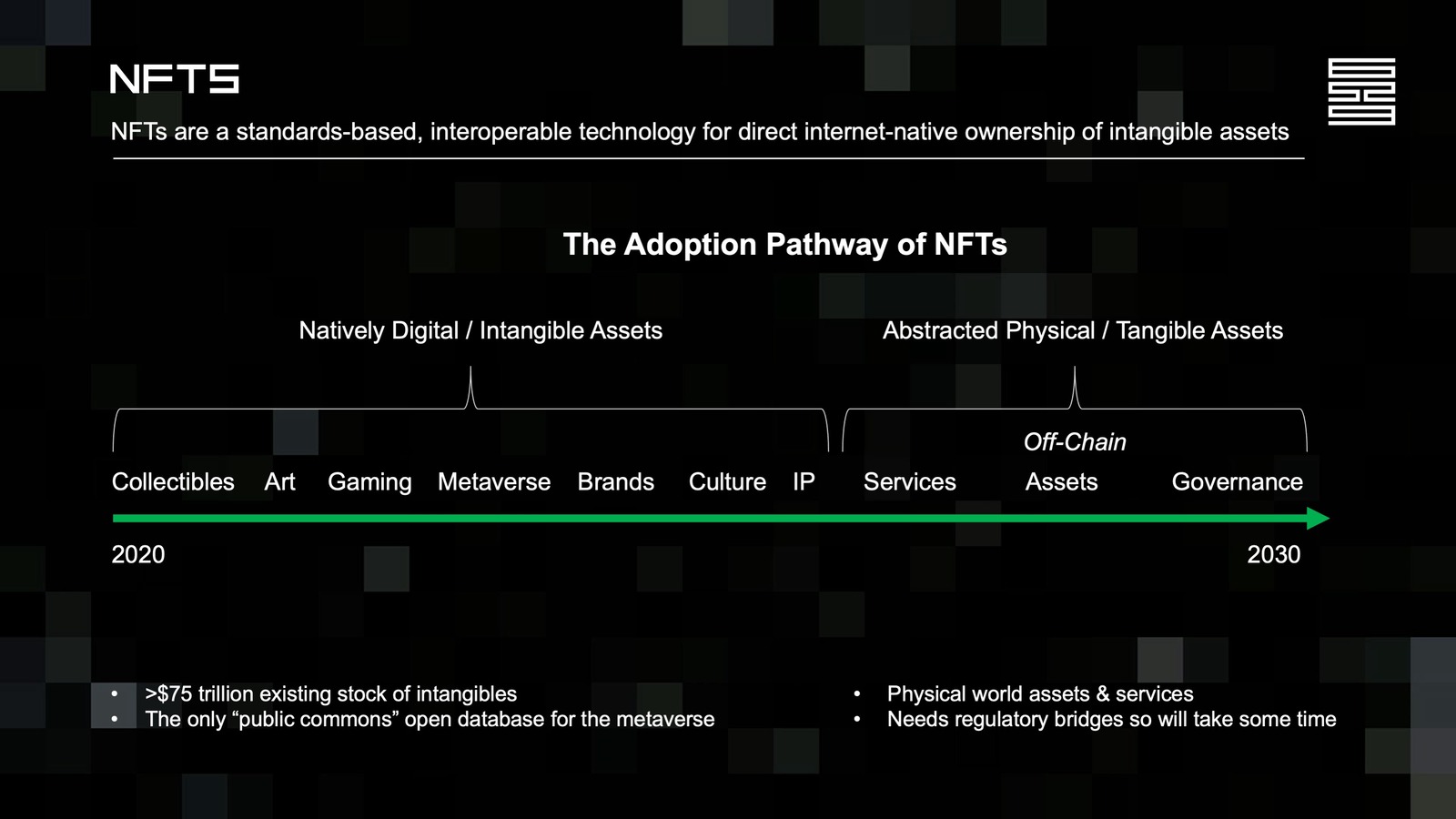
I want someone to get value out of this before they ever hear a speech about decentralization. Freedom must become something useful in their everyday life for this to work.
Getting there is an absurdly ambitious undertaking. It feels like the rebellion taking on the Empire. The technology has to work, the incentives have to work, people have to cooperate, and far too much still depends on one man. There are so many ways for this, us, to fall short.
And the Empire, annoyingly, is very convenient.
People already have services they understand, habits they’re comfortable with, and plenty of other things to worry about. We have to give them a compelling reason to care about digital freedom, and make it practical for them to use it.
So I think failure will look like a lack of growth. If, five years from now, it’s still mostly the same people explaining to one another why the rest of the world doesn’t understand us, we need to be honest about what that means.
By growth, I mean real adoption: people finding useful things to do here, coming back, bringing others, and building things we hadn’t imagined. If we haven’t found that hockey stick in five years, I think we need to pack it in and admit that this attempt didn’t work.
I can be grateful for the art, the friendships, and everything this has meant to me while still acknowledging that we failed to build the larger thing we set out to build. Having devoted years to it makes that admission harder. It doesn’t make it less necessary.
Obviously, that’s not the ending I’m working toward.
I’d like to be tending the same ridiculous bar I still love in five years, as a part time employee, because someone bought it for life-changing money, while explaining to some newcomer who’s realistically a very compelling agent bot, how small all of this used to be.
“You should have seen this place when it was just a handful of us arguing about the most inane shit imaginable.”
And I’d like them to find that almost impossible to imagine.
A collector wants in today. Where do they start, and what does nobody tell them?
Start at thememes.exchange, which is my site. Please enjoy this brief interruption from our completely impartial sponsor. Or browse the collection on OpenSea. Just spend some time looking. Find artists, ideas, and pieces that resonate.
How you collect after that depends enormously on your budget and what interests you.
A complete set is a serious undertaking. My rough estimate is that assembling one today could run into hundreds of thousands of dollars, once you account for the difficult to get cards. And even a substantial budget doesn’t automatically produce a willing seller.
This is something the floor prices won’t explain. Two cards might each have roughly 320 editions and be completely different propositions to collect. One might have several willing sellers. Another might be held by people who are deeply attached to it, maintaining a complete set, or unwilling to give up the TDH associated with their holding history. Selling can also affect collection bonuses.
Edition size tells you how many copies exist. It doesn’t tell you how many you can actually buy.
For people focused on building TDH, GPebbles is a big advocate of steadily collecting the new mints on Monday, Wednesday, and Friday. That gives you a regular opportunity to collect at the published mint price and start building your own holding history. Recent mints haven’t sold out, so there has been room to collect without having to persuade a committed holder to part with something. If drops start selling out quickly again, that flexibility will change.
You should still compare the secondary market. The best purchase for your particular collection can depend on the price, the card’s TDH rate, and what you already hold.
My current philosophy is considerably less elaborate: buy what you like at prices you can afford. I have embraced this approach with the full cooperation of my bank balance, which has declined to fund several more ambitious philosophies.
But here’s what I really want a newcomer to understand: you don’t need an enormous TDH balance to find something valuable here. You can meet people, contribute ideas, make art, build something, and develop a reputation through what you do. You can start participating before buying anything.
What matters to me is believing enough in the possibility to get involved. Giving it some attention. Asking questions. Finding something you want to help make happen. Believing in it doesn’t require pretending you have somebody else’s budget.
And after four years of what has often felt like one long bear market, keeping that belief alive is not a trivial thing. It can be difficult to see possibility when everything around you feels absolutely exhausted.
That’s another reason to meet the people. A collection looks very different once some of the names attached to it become your friends.
Come by the bar. You don’t have to arrive with a complete set or a complete understanding of what we’re doing.
I started with “maybe.”
You could start there too.